The Meritocracy Myth: What the Word Can Hide
The meritocracy myth blurs achievement with deserved advantage. Learn to assess standards, opportunity, and rewards without turning success into a verdict on worth.

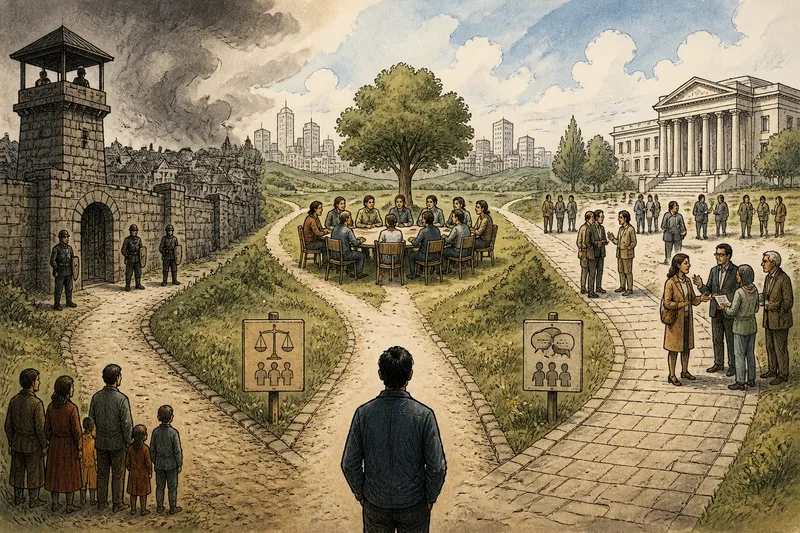
What does a hiring panel mean when it calls someone the “best candidate”? The meritocracy myth begins when a judgment about skill or achievement is treated as proof that the winner deserves every advantage attached to it. Merit can recognize real accomplishment, but it cannot settle whether the standards, opportunities, or rewards are fair.
Merit depends on what a society chooses to value
Calling someone meritorious can make an evaluation sound like the discovery of a natural fact. In practice, merit depends on a choice about what counts. A school might prize exam performance; a theater company might value expressive range; a public agency might look for careful judgment under pressure. Each standard brings some abilities into view and leaves others in the background.
Evaluation still matters. A surgeon needs technical competence, and an orchestra needs musicians who can play their parts. The question is whether a measure fits the work and whether people can reasonably question its use. “Merit” names the result of answering those questions; it does not answer them by itself.
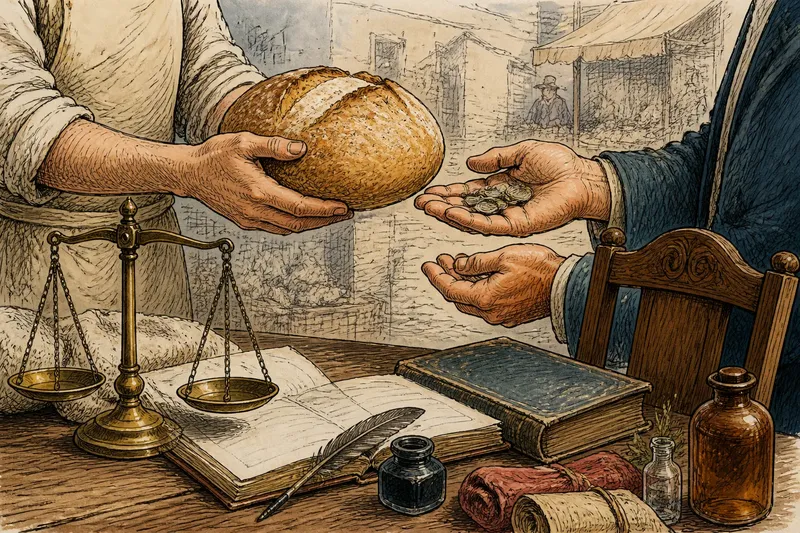
A kitchen scale can weigh flour accurately, but it cannot decide whether a recipe needs flour or whether the baker had access to it. A measure may be precise and still offer an incomplete judgment of deservingness.
Achievement can be real without being entirely self-made
People practice, persist, learn, and take risks. Recognizing those efforts need not mean pretending they arise in isolation. A student’s accomplishment may reflect discipline alongside a quiet place to study, a teacher who noticed a talent, or family members with time to help. Those supports do not erase the student’s work, but they complicate the claim that the result belongs to the student alone.
Public argument often swings between two oversimplifications: success proves superior character, or success is merely luck. Individual choices matter within conditions people did not choose, and the balance differs from person to person and setting to setting.
Imagine a fictional scholarship committee comparing two applicants with similar grades. One had access to tutoring; the other balanced schoolwork with caring for a younger sibling. The committee reviews each application alongside those circumstances and explains how it weighs academic results and responsibilities. The expected observable result is a decision that makes its criteria clear rather than treating a score as a complete account of either applicant.
A valuable contribution does not settle the size of a reward
There is a defensible case for rewarding skill and contribution. Incentives can encourage people to learn difficult work, take responsibility, and improve a service. But moving from “this person contributed something valuable” to “this person deserves this entire advantage” requires another argument.
Rewards also reflect social decisions. A job’s pay can depend on scarcity, bargaining power, convention, and rules of ownership, not just effort or usefulness. A highly rewarded occupation does not automatically prove that its holder works harder or contributes more to the common good than someone whose work receives less recognition. Unequal rewards, by themselves, do not show that all evaluation is unjust.
Ask what a reward is intended to recognize and whether its scale is defensible. A bonus for careful work may recognize a particular contribution. Without further reasoning, it cannot establish that the recipient is generally more deserving as a person.
Opportunity shapes what achievement can reveal
A competition can apply the same rule to everyone and still offer unequal chances to prepare. In admissions based on a timed examination, uniform scoring can make results easier to compare, while access to preparation, stable study time, and familiarity with the exam may differ. A score tells a committee something; it does not tell the whole story of talent or potential.
Fairness does not require ignoring every difference in preparation. It does require clarity about the selection process. If an institution needs someone ready to perform immediately, current skill may matter most. If it is choosing people to train, capacity to learn may deserve greater weight. In either case, a measure of present performance should not quietly become a sweeping verdict on human worth.
Criticizing meritocracy can preserve a commitment to excellence
Meritocracy can express an aspiration: positions should not be assigned through birth, favoritism, or personal connections. That aspiration has force. The danger appears when a system’s winners are assumed to have earned every advantage, while those who lose out are treated as evidence of their own deficiency.
Questioning that conclusion is not a demand to abandon standards. It means asking whether they reflect the task, whether people can develop the qualities being assessed, whether evaluators apply the same criteria, and whether rewards extend beyond what an achievement can reasonably support. Those questions preserve the value of excellence while resisting the habit of turning rank into moral status.
Questions about the meritocracy myth clarify what is being judged?
Does meritocracy mean everyone has an equal chance?
Not necessarily. The term may refer to selection by judged ability or achievement, while equal opportunity makes a further claim about access to preparation and competition. A system can use merit-based criteria without giving everyone comparable chances to meet them.
Is rewarding achievement inherently unfair?
No. Recognition can encourage effort and acknowledge skill. The harder question is whether the standards suit the work and whether a reward is being treated as proof of broader moral superiority.
Can inherited advantage coexist with genuine effort?
Yes. Someone can work hard and benefit from resources or connections they did not create. Recognizing both facts makes an account of achievement more accurate; it does not cancel the achievement.
What does the meritocracy myth hide?
It can hide the choices built into standards, the conditions that shape opportunity, and the gap between contribution and the size of a reward. It can also obscure a simple point: people deserve respect even when they do not win a competition.
Separate recognition from a verdict on worth
The meritocracy myth is persuasive when a visible result seems to explain itself: a title, a grade, a promotion, a prize. Ask what ability that result measured, what conditions shaped the performance, and what advantage is being justified by it. Keeping those questions in view lets you recognize achievement without treating success as proof that every existing inequality is deserved.